How can craft be reimagined as a source of sustainable innovation for the future? This question has guided the work led by VIA University College within CRAFT-IT4SD.
This article looks back at the journey of Pilot 4, from its first exploratory activities to its most recent developments. Through different stages of experimentation, learning and practice-based testing, the Danish pilot has examined how garment design can connect digital technologies, cultural heritage, sustainability and consumer engagement.
At the centre of this process are micro-companies and their evolving practices. The pilot has focused on how they adopt, adapt and reconfigure their ways of working when traditional craft knowledge meets emerging technologies and new sustainability demands.
Rather than treating innovation as a purely technological process, VIA University College has placed craft practice at the centre. In doing so, the pilot has shown how digital tools can support storytelling, material experimentation, inclusive design and more transparent communication with consumers.
A pilot structured through three iterations
Since its launch, the Danish pilot has been developed through three main iterations, each addressing a different dimension of sustainable craft innovation.
The first iteration, carried out in spring 2025, focused on future-oriented exploration. Through workshops with micro-enterprises, participants used “The Thing from the Future” methodology to imagine possible future scenarios for craft, fashion and textile practices. They also experimented with emerging technologies such as generative AI and NFC tags to explore how cultural and material heritage could be communicated to consumers.
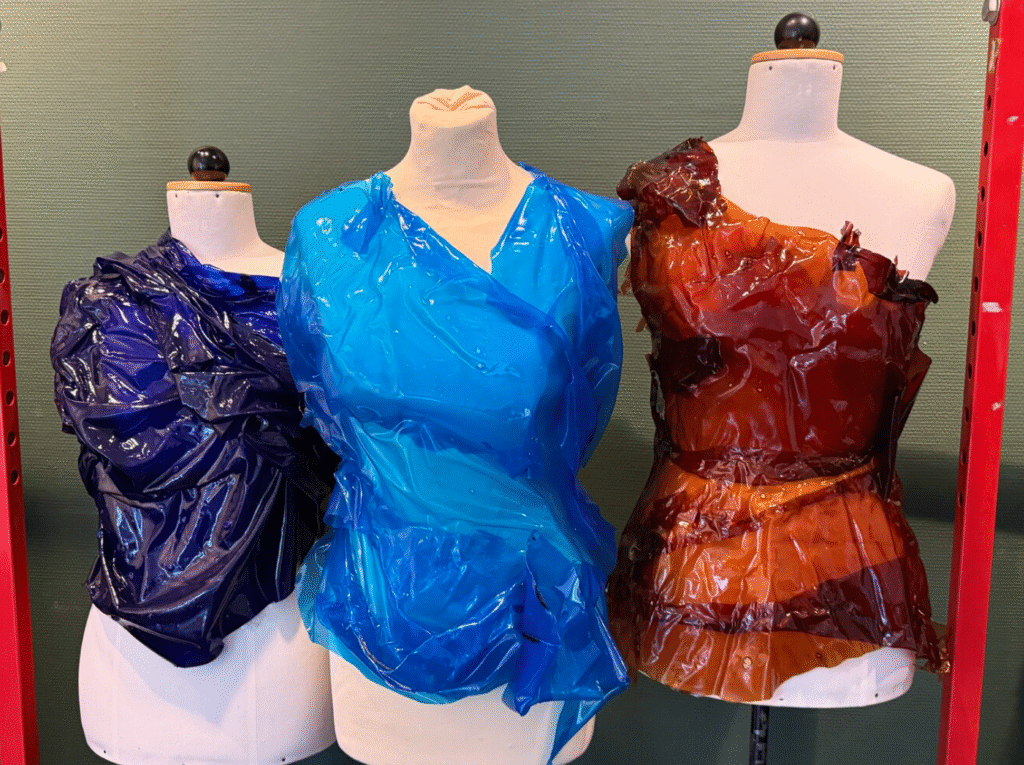
The second iteration, developed in autumn 2025, shifted towards hands-on material experimentation. Micro-companies were invited into VIA’s labs to work with weaving, knitting, printing, dyeing and biomaterial development. This phase also introduced Material Driven Design for Apparel and Textiles, AI-assisted pattern and print development, and material evaluation in the Neuro-Lab.
The third iteration, taking place in spring 2026, focused on body diversity, inclusion and digital product development. Micro-companies explored technologies such as body scanning, Gerber, CLO 3D and biometric testing to better understand consumers and improve product development processes. Activities also included the digitisation of traditional and handmade patterns and the testing of garment concepts in the Neuro-Lab.
Consumer engagement as a central element
Across the three iterations, consumer engagement has played a key role. The pilot did not only ask how products are designed or produced, but also how consumers understand and respond to craft, materials and digital experiences.
Through VIA’s Neuro-Lab, participating companies were able to evaluate consumer emotional responses to storytelling, materials, products and digital experiences using eye-tracking, sensory testing, biometric analysis and qualitative feedback.
This approach generated valuable insights into how consumers engage with sustainability and craftsmanship, while showing how digital tools can make craft processes more visible and meaningful.
From traditional heritage to contemporary product practice
One of the main contributions of the Danish pilot has been its ability to connect cultural heritage with contemporary material and product development.
The pilot explored NFC-enabled storytelling as a way to communicate craftsmanship and heritage through digital channels. It also developed AI-assisted print and pattern design methodologies inspired by Danish textile traditions. At the same time, the digitisation of traditional patterns and workflows opened up new possibilities for craft dissemination and production.
These activities show that digitalisation does not need to replace craft knowledge. When applied thoughtfully, it can strengthen the visibility and future potential of traditional practices.
Key outcomes from the Danish pilot
Pilot 4 has produced tangible and intangible outcomes, including prototypes, materials, products, methods, educational formats and research evidence on how craft practices are reconfigured when traditional heritage and digital technologies are combined.
Key outcomes include:
- NFC-enabled storytelling tested with consumers in the Neuro-Lab.
- AI-assisted print and pattern design inspired by Danish textile traditions.
- Flexible bio-based materials as alternatives to conventional textile resources.
- Material-driven design approaches supporting circular and resource-conscious product development.
- Digitised traditional patterns and workflows.
- Inclusive design concepts addressing body diversity and accessibility.
- New learning formats for future fashion and textile professionals.
- Consumer insights generated through biometric and sensory testing.
In total, Pilot 4 has produced more than 20 individual projects involving companies, students, researchers and practitioners, each exploring different intersections of craft, sustainability and technology.
Strengthening micro-companies and future skills
The Danish pilot has contributed to strengthening the digital capacity of participating micro-companies. It has helped them explore how technologies can support product development, communication and consumer engagement, while also increasing readiness for future Digital Product Passport requirements.
The pilot has also highlighted the importance of future-oriented skills in the fashion and textile sectors, including digital literacy, material innovation, sustainability knowledge, consumer understanding and inclusive design.
Towards sustainable craft innovation
The Danish pilot demonstrates that craft can be a powerful driver of sustainable innovation when connected to digital technologies, material experimentation and consumer engagement.
By working with micro-companies, students, researchers and practitioners, VIA University College has created a learning environment where traditional heritage and contemporary design practices can meet. The process has generated prototypes, materials, methods, educational formats and research insights on how craft practices evolve when traditional heritage and digital technologies are combined.
From the first workshops to the latest lab-based experiments, Pilot 4 shows the journey of VIA University College and its collaborators in bringing together cultural heritage, digital technologies and contemporary material practice.