
By Rune Thorbjørn Clausen & Simon Peter Larsen. VIA University College
If one pays a visit to our design school’s craft labs, one will, among others, find a unique infrastructure consisting of multiple workstations for embroidery, weaving, dyeing, finishing, and digital printing. The labs house both analogue and advanced digital textile technologies, including circular and flat industrial knitting machines for fully fashioned and ready-to-wear production, digital dobby and jacquard looms, and an industrial dobby sample loom. If one takes the time to walk around, one will notice that this is not a polished exhibition space but a somewhat messy working environment, in which students, educators, and guests experiment with materials as evidenced by the pieces of yarn, pigments, samples, and half-finished swatches that fill worktables and pile up in corners.
As part of CRAFT-IT4SD, we invited five textile and fashion designers to spend a week in these labs, exploring fibers, yarn structures, printing, and dyeing techniques through analogue and digital weaving and printing technologies. Throughout the week, we conducted intense ethnographic fieldwork, following how they carried out their work as they moved between stations, testing ideas and experimenting with materials. These observations were supplemented with qualitative interviews conducted before, during, and after the ‘lab visit’, providing rich accounts of textile craft in the making.
Our close-up presence placed us within what Goffman (1959) would call the backstages of craft making or the zone where the visible products and outcomes are prepared and negotiated. Backstage access matters. While the frontstages of craft present the finished artefacts/products together with coherent process narratives, the backstages are, as Goffman (1959) reminds us, where the work that prepares these outcomes takes place: often messy, effortful, contingent, and largely invisible to outside observers (Star & Strauss, 1999). However, being present in the labs enabled us to witness and foreground the invisible articulation work (Strauss, 1988; Corbin & Strauss, 1993) performed backstage. That is, the “fitting together” of tasks to accomplish work (Strauss, 1988:163) and the “real-time adjustments” that allow work processes to complete (Star, 1999: 385), all of which typically remains out of sight but nonetheless make up important background work (Star & Strauss, 1999).
Based on a preliminary analysis of our ethnographic inquiry, we present below five forms of backstage work that become visible when observed closely yet remain functionally invisible because they are taken for granted, treated as peripheral, and often do not count as work for outsiders, even though they quietly sustain the work (Star & Strauss, 1999).
Calibration work
In the weaving lab, the textile designers adjusted warp tension, tested fiber behavior, corrected density, and rescaled patterns when moving between Adobe files and TC2 software. Changes such as switching yarn type or modifying a weave structure required rebalancing tension or rechecking how the pattern translated into the loom’s logic. In the print studio, pigment pastes required careful balancing to account for subtle shifts in color, viscosity, or absorption across fabrics. The jacquard setup likewise demanded repeated trials to ensure that digital structures aligned with mechanical operations, with textile designers adjusting lift plans, density settings, or fabric take-up to achieve the desired result. These continuous calibration efforts, although small, iterative, and often unnoticed, kept workflow moving despite constant variation across fibers, tools, and technologies.
Repair work
Backstage, repair work took many forms from troubleshooting machines to rethreading yarns and repairing data across digital systems. For example, one of the textile designers moved between her MacBook running Adobe programs and institutional PCs hosting loom-specific software, while legacy recipe archives were stored on CD-ROMs, which needed a special adapter. Overall, they frequently had to locate the correct cables, manage USB drives, retrieve lost files, or reformat documents so they could be read by different machines. Looms sometimes jammed or lost tension, print files failed to load, or calibration settings unexpectedly reset. Each of these moments required improvised workarounds, and each transition demanded translation in the sense of converting file types, adjusting color profiles, or interpreting legacy data formats. In these moments, the designers acted as quiet repairers, smoothing misalignments between digital and material domains to sustain workflow.
Waiting work
Waiting is likewise an integral part of the craft process often overlooked: pigment pastes need time to settle and stabilize, printed textiles need time to cure, designs must load into loom software, and machines require periodic resets, software may suddenly decide to close or the printhead may be in need of a cleaning cycle. At other times, the designers simply waited for access to a tool or for a file to render after a crash. Rather than constituting passive downtime, these temporal intervals functioned as what Stark (2009) calls “productive friction”, affording the practitioners opportunities to reorder tasks, reflect, and prepare forthcoming steps. In this way, waiting became a form of temporality work through which actions were synchronized with the rhythms of materials, machines, and digital systems.
Coordination work
Throughout the week, the textile and fashion designers navigated between materials, machines, and workstations from digital and analogue weaving looms, laptops, cameras, pens and paper, mixing stations, physical samples, and printed tests. Their movements resembled a spatial choreography in which work was expressed through positioning, sequencing, and alignment. They alternated between digital preparation, material testing, loom adjustments, and sample evaluation, coordinating each step to ensure that tasks, tools, and materials came together at the right moment and in the right configuration.
Cleaning work
Cleaning work formed a subtle but crucial part of the backstage environment. The designers unwound and reset looms, prepared chains, disentangled and sorted samples, removed lint or fiber build-up around weaving sensors, rinsed screens, bowls, or spatulas used for pastes, and pulled on protective lab coats in the print studio. These forms of hygiene and reset work ensured that machines, materials, and bodies could operate safely and effectively. Although easily dismissed as peripheral or routine, cleaning work quietly stabilized the conditions in which craft making could occur, allowing the next sequence of tasks to begin without disruption.
Why a backstage perspective matters for textile craft innovation
Seeing craft work from a backstage perspective allows us to surface invisible work and thereby invites us to reconsider what craft work consists of and where innovation processes are born and developed. The visible outputs that eventually circulate in exhibitions, on curated social media platforms, portfolios, or in final collections represent only the final, polished moment of a much larger ecology of work. Our observations reveal that such an ecology is held together by persistent and often overlooked subsets of work forms: calibration, repair, waiting, coordination, and cleaning. These forms of background work do not typically count as craft work in the eyes of many clients and the broader public. However, while they may appear unglamorous and at times even tedious they are indeed foundational to craft work.
For CRAFT-IT4SD, this matters for two main reasons. First, CRAFT-IT4SD aims to support the integration of craft heritage and emerging digital technologies. Doing so requires an understanding not only of new digital tools themselves but of the backstage infrastructures, whether physical, temporal, relational, or digital, that enable such tools to be used meaningfully. Textile and fashion designers in craft work do not innovate simply by adding new technology; they innovate through the invisible articulation work that aligns machines, materials, bodies, workflows, and institutional routines. Second, acknowledging backstage work helps identify in what ways textile and fashion designers in craft work encounter friction, breakdowns, or bottlenecks in their processes. This is crucial for building craft infrastructures and learning environments for practitioners. The moments of calibration, repair, waiting, coordination, and cleaning we observed point to specific areas where infrastructures could be strengthened, whether through improved interoperability between systems, better documentation, more flexible lab configurations, enhanced temporal flexibility, or clearer protocols for maintaining shared spaces.
Finally, for the broader cultural and creative sectors and industries (CCSI), the backstage lens presents an alternative way of understanding craft that goes beyond the common view of craft as either highly traditional or purely aesthetic. Instead, our observations point to the importance of recognizing and valuing the invisible work performed in textile craft making. Recognizing this complexity is essential for policy frameworks that seek to support craft practitioners, whether through funding, skills development, or infrastructural investment. In short, attending backstage allows us to see textile craft not simply as an artistic output but as a sustained project of “fitting together tasks in order to accomplish work” (Strauss, 1988). Thus, if we are to strengthen the cultural and creative industries, we must also strengthen the backstage conditions that make meaningful craft innovation possible.
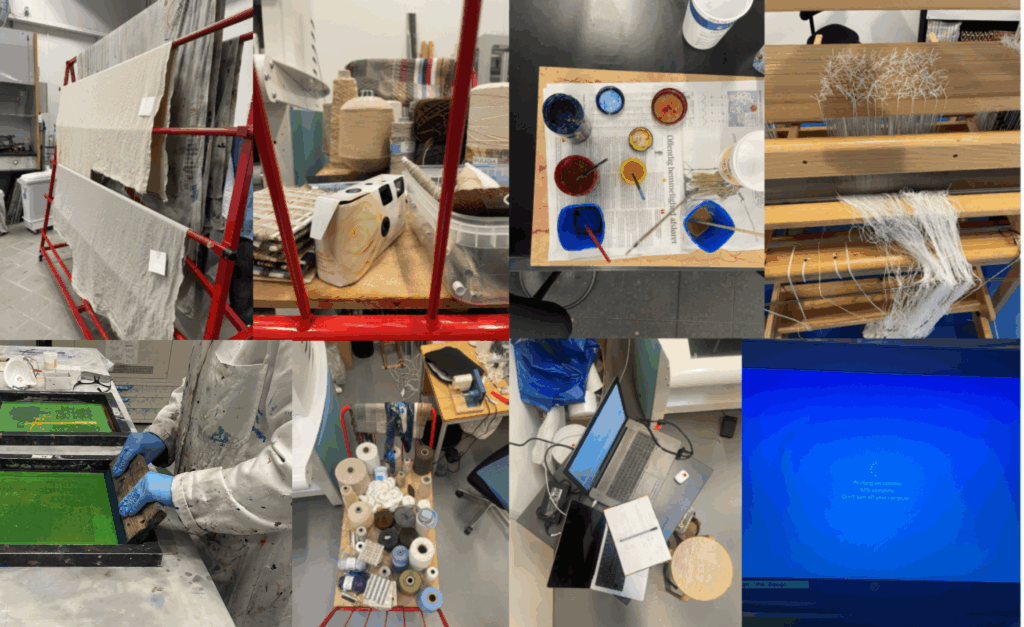
Figure 1. A visual peak into backstage work. Source: VIA University College
References
Corbin, J.M. & Strauss, A.L. (1993). The articulation of work through interaction, The Sociological Quarterly, 34(1):71–83.
Goffman, E. (1959). The presentation of self in everyday life. Doubleday.
Star, S.L. (1999). The Ethnography of Infrastructure, American Behavioral Scientist, 43(3): 377-391.
Star, S.L. & Strauss, A.L. (1999). Layers of silence, arenas of voice: The ecology of visible and invisible work, Computer Supported Cooperative Work, 8: 9–30.
Stark, D. (2009). Sense of Dissonance: Accounts of worth in economic life, Princeton University Press.
Strauss, A.L. (1985). Work and the division of labor, The Sociological Quarterly, 26(1): 1–19.
Strauss, A.L. (1988). The articulation of project work: An organizational process, The Sociological Quarterly, 29(2):163–178.